Saturday, February 25, 2012

...and now for something completely different.


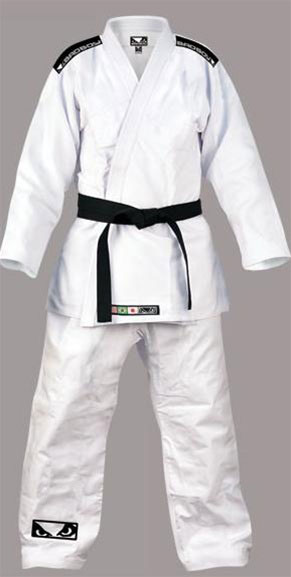
    So my partner is a martial artist and is, at the moment focusing jiujitsu. He and our roommate were talking about the gis (the outfit you wear when practicing martial arts) and how to wear them properly. Ty mentioned that you cant wear them with the right breast over the left because that manner is only used as funeral clothing (see step 4). In fact this is apparently a rule in traditional Japanese kimonos in general that in life the left breast is over the right and in death the right is over the left. I know that isn't really to with the archaeological part of the course but I found it an interesting piece of applicable random knowledge from my sagely boyfriend.

Right over left in death.
Left over right in life.

Friday, February 24, 2012

Gay Caveman...is it any of our business?

    So the blog prompt for this week is to look up the "gay caveman" and respond to what we find. Well the first thing I found was an article discussing the media reaction to the gay caveman, specifically those focused on the gay part. The points I found most interesting were the value of the "caveman's" sexual identity to those attempting to establish an understanding of human sexuality over our entire existence, thereby blowing the anti-gay movement out of the water. Now, my title for this blog post is a little facetious in that, as an anthropologist I am naturally inclined to make it my business to know as much about any archaeological find as possible. But realistically, can we transpose our understanding of masculinity and femininity or sexual orientation on prehistoric people? It would be excellent for the gay rights movement if we could find evidence that non-standard sexuality was a biological norm, but maybe we're putting a little too much pressure on this one poor "caveman". The title 'gay caveman' is also an issue as the 'caveman' part is not just questionable like the 'gay' part but flat out wrong. He is most likely a pre-Bronze Age Corded Ware farmer; thanks again, mainstream media, for completely effing up the potential layman's view of the guy. Its frustrating when things like this title mixup happen, but at the same time they can be helpful in some ways, as "gay caveman" is a more catchy title than "ambiguous-gendered-Corded-Ware-dude" so more people are likely to read about it and become interested in archaeology. 


    Finally, as an anthropologist I am compelled to make my own suggestions regarding this burial, farfetched and unfounded as they may be. Have we considered his potential role as a co-head of household, assuming the feminine role when no female was present? What about obesity, representing the abundance, fertility, and nourishment usually provided by a females? Or perhaps an abnormal manner of death, requiring an opposite manner of burial. Maybe he was a sacrifice in an attempt to save a female member of the group and burial as a female signified this or was a means of confusing the spirits into thinking they had the female they wanted.


Monday, February 20, 2012

Wartime on Salt Spring


So we trekked out to Salt Spring Island for our monument analysis project on a bright sunny morning that matched our neon coloured recording forms and turned out to predict the joy we felt upon getting indoors and consuming hot drinks after three hours of freezing our fingers off recording monuments at the St. Paul's Catholic Church cemetery.

We had arranged to meet at the ferry terminal but ended up all taking the same bus out there (for some reason we hadn't considered this likelihood before). I feel like this have been more comical than it was, but we were all too tired to appreciate it.

We originally journeyed out to the cemetery with the knowledge that it was largely populated by Hawaiian families who played a major role in the construction of the church as there had been a large population in the early history of settlement. We found many monuments bearing shell necklaces, the markers of Hawaiian graves. We were basing our sample on this defining characteristic and found thirteen monuments that fit our requirements. But as were recording we began to wonder if the shell necklaces were a reliable indicator of Hawaiian burials or if they were simply distributed around the cemetery willy-nilly. Many of the graves were accompanied by photographs of the dead. These images were laminated for protection but had been significantly damaged by weather and age. Luckily several of the images can be found in a paper about Hawaiian history in British Columbia.

Upon checking our list of Kanaka surnames we found that all with necklaces did match those on our list but many others in the cemetery that had no shells were also on our list. I feel like this is yet another reminder that funerals and monuments are about the living rather than the dead. The living are the ones who maintain the monuments, re-distributing shell necklaces to the graves of their loved ones. The Kanaka graves without shells are likely to simply have no one regularly visiting them or relatives who no longer see significance in the shell necklaces. 

    While recording we also noticed a common form of monument. The sarcophagi made of cement with impressed lettering were common throughout the cemetery. Upon closer consideration we realized that they all bore dates relating to war-times or the depression. These less expensive alternatives to the pre-war standing stones/obelisks and the post-war carved flat stones maintain a feeling of permanence and importance while remaining practical in such a tumultuous period.
View St. Paul's Catholic Church Cemetery, Salt Spring Island in a larger map


Sources:
Barman, J 1995, 'New land, new lives: Hawaiian settlement in British Columbia', The Hawaiian journal of history, vol. 29, pp. 1-32