I love TimeTeam. I have every episode and special they made, including the year end reports. Its my spare time show. And I know that when it first came out there were some serious concerns among the archaeological community about its value and also the commercial element. But it is run by archaeologists and has a good relationship with British Heritage, etc. They tired to bring the show to the U.S. but only did one season. I guess the american public weren't particularly interested, or the archaeologists went into an uproar, but either way it stopped running and there haven't been any archaeological reality shows in the states since then.
It seems that may be about to change. This guy, Ric Savage, is planning to wander around the U.S. digging up peoples' back yards and selling whatever he finds, all for Spike TV's new show "American Digger." He says he has always had a passion for digging and after his pro-wrestling career started digging for a living. He asks private land owners for permission before digging up their back yards and splits the proceeds with them when something valuable is found. The AIA and other archaeologists are in an uproar now. Letters have been sent out and rebutted, articles written from both sides, and the producers of the show are now talking about a compromise that includes input from archaeologists.
The people involved in the creation of the show say that the archaeologists are overreacting and that the show is completely legal. They cite Ric's right as an American citizen to dig up whatever he wants provided he has permission from the land owner.
But the archaeologists remind us that this might be pushing it in terms of "the american dream" and may end up destroying valuable artifacts and information as well as encourage others to go out and dig willy-nilly. They have that right in their own back yards, but it is only a matter of time before they move into parks, battlefields, and native burial grounds looking for quick cash from out of context finds. On the other hand the show might inspire people to pursue legitimate archaeological careers.
Heres an article by the Times if you're interested.
Having just realized that I was supposed to write a blog post about my group's project, I figure I had better get on that... For our project we created an ideal rubric by which we would like to be graded. But before we compare our own website to that rubric we have to give it a test drive. This is also an opportunity for us to see what other websites on dealing with similar topics look like. Do they measure up to our standards?
I chose to grade a cute little website about the Picts that looks like it was made in the good old days...like maybe 2008. I fell like I may have been a little forgiving in my grading, taking into consideration the fact that they didn't make their site with our criteria in mind. The site is called Pictish Nation and can be found here if you would like to compare your own opinion of it with mine.
Content: (19/20) - The website has a very clear purpose and topic.
Database: (N/A) - No database is included in this site so I have exempted it from that category.
Content Accuracy: (13/15) - Although I did not check all the information on the site it appeared fairly accurate and well founded based on what I do know of Picts.
Layout: (9/15) - The website is clear and fairly easy to navigate but I would not call it attractive and although the navigation is easy it is a little clumsy and could be streamlined to make navigation even easier.
Research/Bibliography: (10/15) - The site has a reference list with useful information for finding the sources but does not appear to be in any recognized citation style.
Cooperative Work: (N/A) - I am unable to tell how many people worked on the site or whether they got along so I have also exempted the site from this category.
Spelling and Grammar: (4/5) - there were a few small spelling and grammar errors but nothing that diminished from the clarity of the text.
Citations: (3/5) - The reference list is helpful but the author(s) fail to cite within their text so the usefulness of those sources is limited.
Pictish Nation seems like a fairly good website, though I would be wary of using it in an academic work. The sources it cites would be more appropriate. The site does a fairly nice job of covering what we know about the Picts. Along with the introduction it has pages on the Pictish kings, ancient scottish names, the treason of Mac Alpin, connections to Spain, and information on other sources of information on the Picts.
Grade: 58/75 - 77%
16-20
11-15
6-10
0-5
Content
19/20
The website has a thoughtful and clear purpose and theme that is maintained throughout the website.
The website has a clearly stated purpose and theme. However, there may be some elements that appear unrelated.
The websites purpose and/or theme is unclear or vague.
The website does not contain a clear purpose or theme.
Database
NA/20
Database contains a large data set with relation to available material. Details provided are thoughtful and informative.
Database contains a somewhat large data set with relation to available material. Details provide some thoughtful information, although it may not provide useful information and/or some information is questionable
Database contains a small data set with relation to available material and does not provide enough useful or relevant information.
Database does not contain any useful or relevant information.
14-15
10-13
9-5
0-4
Content Accuracy
13/15
All information on the website is accurate. All requirements of the assignment are met.
Most of the information on the website is accurate with a few discrepancies. All requirements of the assignment are met.
Equally inaccurate and accurate information on website. Most of the requirements of the assignment are met.
Several inaccuracies on the website with regard to information provided; and/or a large portion of assignment requirements were not met.
Layout
9/15
The website and its pages are attractive and easy to navigate. All information is presented well and is easy to locate. Photos, tables and figures are used to enhance presentation.
The website and its pages are clear and easy to navigate. Most information is presented well and easy to locate. Photos, tables and figures are used somewhat effectively, but may distract from the main focus of web page in some cases.
The website and its pages are easy to navigate, but may be inconsistent/messy/monotonous. Most information is easy to locate.
The website and its pages are confusing/cluttered/distracting. Information is difficult to locate.
Research/ Bibliography
10/15
Scholarly research was obviously attempted. Reference list contains only clearly reliable and/or peer reviewed sources based on available material on subject.
Scholarly research was attempted. Reference list contains mostly clearly reliable sources, but also 1 or 2 unreliable ones.
Some attempt at scholarly research was made; most sources are unreliable.
No attempt at scholarly research was made.
5
4
2-3
0-1
Cooperative Work
NA/5
Partners show respect for each other’s ideas, divide the work fairly, and show a commitment to quality work and support for each other. AND The information appears as if it had only been written by one author.
Partners show respect for each other’s ideas and divide the work fairly. There is commitment by some members toward quality work and support of one another. OR Writing does not appear to be completely unified.
Partners show respect for each other’s ideas and divide the work fairly. There is little evidence of a commitment toward quality work in the group.
Partners argue or are disrespectful of other's ideas and input. Criticism is not constructive nor is support offered. The work is mostly done by one or two people.
Spelling and Grammar
4/5
There are no errors in spelling, grammar or punctuation that distracts the reader from the website content.
There are a few errors in spelling, grammar or punctuation that are somewhat distracting to the reader.
There are several errors in spelling, grammar or punctuation that are extremely distracting to the reader.
There are many errors in spelling, grammar or punctuation.
4-5
0-3
Citations
3/5
All/most citations are correct and follow the Harvard guide provided on Moodle.
All/many citations are incorrect and do not follow Harvard guide provided on Moodle.
(I dont know why it warped the cells of the last two columns. Sorry)
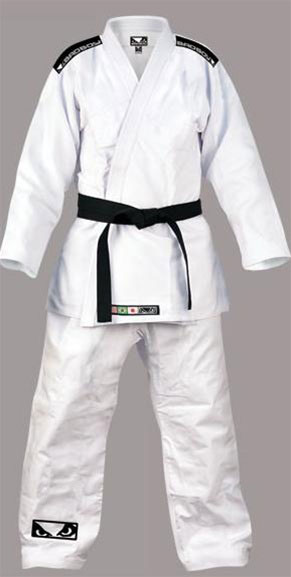
So my partner is a martial artist and is, at the moment focusing jiujitsu. He and our roommate were talking about the gis (the outfit you wear when practicing martial arts) and how to wear them properly. Ty mentioned that you cant wear them with the right breast over the left because that manner is only used as funeral clothing (see step 4). In fact this is apparently a rule in traditional Japanese kimonos in general that in life the left breast is over the right and in death the right is over the left. I know that isn't really to with the archaeological part of the course but I found it an interesting piece of applicable random knowledge from my sagely boyfriend.
So the blog prompt for this week is to look up the "gay caveman" and respond to what we find. Well the first thing I found was an article discussing the media reaction to the gay caveman, specifically those focused on the gay part. The points I found most interesting were the value of the "caveman's" sexual identity to those attempting to establish an understanding of human sexuality over our entire existence, thereby blowing the anti-gay movement out of the water. Now, my title for this blog post is a little facetious in that, as an anthropologist I am naturally inclined to make it my business to know as much about any archaeological find as possible. But realistically, can we transpose our understanding of masculinity and femininity or sexual orientation on prehistoric people? It would be excellent for the gay rights movement if we could find evidence that non-standard sexuality was a biological norm, but maybe we're putting a little too much pressure on this one poor "caveman". The title 'gay caveman' is also an issue as the 'caveman' part is not just questionable like the 'gay' part but flat out wrong. He is most likely a pre-Bronze Age Corded Ware farmer; thanks again, mainstream media, for completely effing up the potential layman's view of the guy. Its frustrating when things like this title mixup happen, but at the same time they can be helpful in some ways, as "gay caveman" is a more catchy title than "ambiguous-gendered-Corded-Ware-dude" so more people are likely to read about it and become interested in archaeology.
Finally, as an anthropologist I am compelled to make my own suggestions regarding this burial, farfetched and unfounded as they may be. Have we considered his potential role as a co-head of household, assuming the feminine role when no female was present? What about obesity, representing the abundance, fertility, and nourishment usually provided by a females? Or perhaps an abnormal manner of death, requiring an opposite manner of burial. Maybe he was a sacrifice in an attempt to save a female member of the group and burial as a female signified this or was a means of confusing the spirits into thinking they had the female they wanted.
So we trekked out to Salt Spring Island for our monument analysis project on a bright sunny morning that matched our neon coloured recording forms and turned out to predict the joy we felt upon getting indoors and consuming hot drinks after three hours of freezing our fingers off recording monuments at the St. Paul's Catholic Church cemetery.
We had arranged to meet at the ferry terminal but ended up all taking the same bus out there (for some reason we hadn't considered this likelihood before). I feel like this have been more comical than it was, but we were all too tired to appreciate it.
We originally journeyed out to the cemetery with the knowledge that it was largely populated by Hawaiian families who played a major role in the construction of the church as there had been a large population in the early history of settlement. We found many monuments bearing shell necklaces, the markers of Hawaiian graves. We were basing our sample on this defining characteristic and found thirteen monuments that fit our requirements. But as were recording we began to wonder if the shell necklaces were a reliable indicator of Hawaiian burials or if they were simply distributed around the cemetery willy-nilly. Many of the graves were accompanied by photographs of the dead. These images were laminated for protection but had been significantly damaged by weather and age. Luckily several of the images can be found in a paper about Hawaiian history in British Columbia.
Upon checking our list of Kanaka surnames we found that all with necklaces did match those on our list but many others in the cemetery that had no shells were also on our list. I feel like this is yet another reminder that funerals and monuments are about the living rather than the dead. The living are the ones who maintain the monuments, re-distributing shell necklaces to the graves of their loved ones. The Kanaka graves without shells are likely to simply have no one regularly visiting them or relatives who no longer see significance in the shell necklaces.
While recording we also noticed a common form of monument. The sarcophagi made of cement with impressed lettering were common throughout the cemetery. Upon closer consideration we realized that they all bore dates relating to war-times or the depression. These less expensive alternatives to the pre-war standing stones/obelisks and the post-war carved flat stones maintain a feeling of permanence and importance while remaining practical in such a tumultuous period.
Its kind of funny that the blog prompt for this week included a question about where we would do a monument analysis if we could choose anywhere in the world, because I was thinking just a few days before about how interesting it would be to study the Hornby Island Cemetery. I grew up on Hornby and miss it all the time so anything to do with Hornby is of interest to me. That said, I don't think I've been to the cemetery more than twice in my life.
It's a very small cemetery, appropriate for a very small island, and is situated on the main road across the island, in a little clearing, just before the community hall and school grounds. There's a rough screen in the form of a row of trees, separating the property from the road. No church is associated with the cemetery and I have a niggling feeling that it was started by some denomination but whatever it was is no longer really acknowledged. The plots in the cemetery are an eclectic mix of religions and styles.
I'm thinking that if I get more than two days on the island in the near future I might just go and do a little monument analysis for fun. But lets be honest, I never get more than two days anymore.
If you want some pictures try this link and click through a few pictures of individual monuments (there should be 7). Avi's flickr site vetoed my attempts to post the photos directly to my blog.
So, I found four fascinating forms of alternative burial but have had a bit of trouble finding out if you can actually have them done in B.C.
- Burial at sea
In this method the body is cremated and the ashes are scattered into the sea. I could only find one company, out of Victoria, that advertised this service. They take the family members out to the assigned point and scatter the ashes they then sprinkle flower petals into the sea at the spot. Apparently the paperwork required to do this takes about 8 weeks to process and is so costly and time consuming most people aren't going for it. This is the only disposal option of the four I found that I am certain is legal in B.C.
(http://www.bowersfuneralservice.com/faq.php)
(http://www.marineecotours.com/recreation/boat-charters/scattering-ashes-at-sea-victoria)
- Memorial reef
The body is cremated and included in concrete used to make a reef bud. While the cement is still wet family members are allowed to write messages in it or imprint handprints. The reef bud is then taken out to sea and dropped in to start a new reef. This is a really beautiful means of disposal as it creates a habitat for new sea life and does not take up space on land. I found a company that provides this service in Florida but couldn't find one in B.C. That said, Sidney harbor has an artificial reef so it is not a far step to envisage memorial reefs in B.C. at some point in the future.
This video is of the Neptune Memorial Reef off Miami. Its a long video (5 min) but it really interesting and an extreme example of memorial reefs.
(http://www.eternalreefs.com/)
- Promession
This Swedish invention operates in a similar manner to regular cremation in that the body is on display for the funeral but the casket is then flash frozen and shaken to shatter the body, the pieces were then dried out and put in an urn to be buried. Some say this is possibly the greenest form of disposal. I still haven't managed to find anywhere in B.C. that offers this service but neither have I found anything saying it is illegal.
(http://www.promessa.se/?lang=en)
- Resomation
This method is similar to promession but rather than freezing and shattering the body it is put in a solution that dissolves the body leaving sterile water and the bones which are then crushed and returned to the family. I haven't managed to find anyone in B.C. offering this but that may not be because it's illegal, maybe there just isn't enough demand.
(http://www.resomation.com/)
So I dragged myself out of bed to get to class on time and it was cancelled. I must admit I was a little heartbroken thinking about the extra hour of sleep I could have had, but life happens and plans change, so like pretty much everyone else I sleepily mumbled something about caffeine and moved on. Despite my having only one or two superstitious bones in my body, because it was friday the 13th I went to my other classrooms for the day to make sure they hadn't been cancelled too (sadly they hadn't), you never know how many superstitious bones professors might have in their bodies.
A suspicious beagle with a superstitious bone
Then... (cue ominous music)... I went to stand in the line at academic advising (for what felt like days but was really more like half an hour) to declare my major, something I probably should have done at the end of second year but... I have considerably more procrastinating bones in my body than superstitious ones. I also checked into what I would need to do to get credit for a field school that I really want to go on this summer but shouldn't be torturing myself with cause there's no way I can afford to... damn you gorgeous foreign archaeological sites! Then I grabbed another hot chocolate and went to doze in front of the classroom my next lecture was in.
Really a rather productive hour, although had class not been cancelled I would much rather have learned about death and burial than committed myself to an awesome but terrifying double major of doom.
Hey all,
just wanted to post a little warning to anyone thinking of going on a field school this summer. DON'T GO ON THIS ONE or any other one that has Krassimira Luka as the director. I did in 2010 and it was a gong show. The thing was a scam and the little we did learn was from other participants who had more experience than us and ended up basically having to run the thing. most of the things it says are included in the fee aren't and we ended up having to pay more once we got there because they had miscalculated the costs.
I don't want to slander Bulgaria as a whole 'cause the trip was amazing, but that specific field school and the director are bad news. If you want more info you can ask me but really, truly, avoid Cambustica and Ratiaria at all costs. If you want a field school in Bulgaria do one in Sofia or one from this site.
The Roman fort at Belogradchik where we got to go after kidnapping a couple of our drivers and paying our own entry fee despite it being advertised as one of the historical sites included in our trip. If you're ever in Bulgaria you have to go here, this photo is just the very front tip of the iceberg.
I'm taking this course because I want to be an archaeologist, but also because I am fascinated by death. I often ponder the many personas humans project in differing situations and relationships and I think burial is a reflection of those personas as experienced by the people who organize our burials. I am also interested in the multitude of ways in which human mourn and commemorate their dead. Christian cultures are so dour and reserved about the whole thing; we are quick to clean up and move on from death while still making sure to properly exhibit our loss. Other cultures wail and cry for the dead or tear their hair out in grief openly displaying their emotions regarding the loss of a loved one. The recent death of Kim-Jong Il and the North Korean media coverage of his mourners gained a lot of response from North American media, which questioned the veracity of the North Korean population's bereavement but did not seem to take into account the cultural differences that may have lead to such a display.
Shirley McDonnell
My grandmother died when I was 9. She passed in her sleep from a heart attack triggered by a reaction to some dental work she had done a day or two before. Several years later my mother told me that Grandma had wanted to be cremated and have her ashes scattered from the Isle of Skye. Instead, my grandfather had her buried at the family plot in Lindsey, Ontario, next to relatives she was never very fond of. This taught me, at a young-ish age, that burial is not a reflection of the person as they saw themselves or as they wished to be remembered but more often it is a reflection of the wishes of those left behind. Years later, when we flew out to Ontario to attend my grandfather's funeral I saw the headstone with his freshly carved name next to her slightly older one and the much older inscriptions marking long-dead McDonnells I never knew and don't feel much affinity to.
I want my ashes scattered from Skye or my inhumation to have lots of nice grave goods for someone to dig up and theorize over in a few hundred years.